
Research & Development
Cooperation and innovation agreements
We have research, development and innovation cooperation agreements with the research centre CARTIF and with the National Technological University of Athens, NTUA, thus strengthening our scientific and technological capabilities.
A smart approach to R&D
Our leading-edge technology
Alternative energy
Together with environment and energy consultants Auma S.L., we’re studying alternative power sources for Triton plants, including wind, solar, and other renewables.
The saltwater intake valve
We’re continually improving our plants’ saltwater intake valve. When we keep the incoming saltwater stream clear of debris and minerals, we increase the efficiency of the water intake.
Brine usage
Brine is the stream of highly concentrated saltwater left after seawater has been desalinated. We’re looking into ways to recycle brine for use in industrial applications—for instance, extracting the salt from the brine and selling it to the chemical industry. And the water discharge might be used in food processing—for example, to clean fish.
Innovative devices
Energy-saving technology
Triton also promotes the development and testing of innovative devices aimed at maximizing energy efficiency in desalination processes.
The pressure exchanger
Invented by Leif Haugen and field-tested by Triton, the pressure exchanger is an ingenious energy-saving device. In a Triton plant, after the water is filtered, the brine shoots out of the membranes at a very high pressure. The pressure exchanger captures that pressure and uses it to increase the pressure of the incoming seawater.
The nessie pump
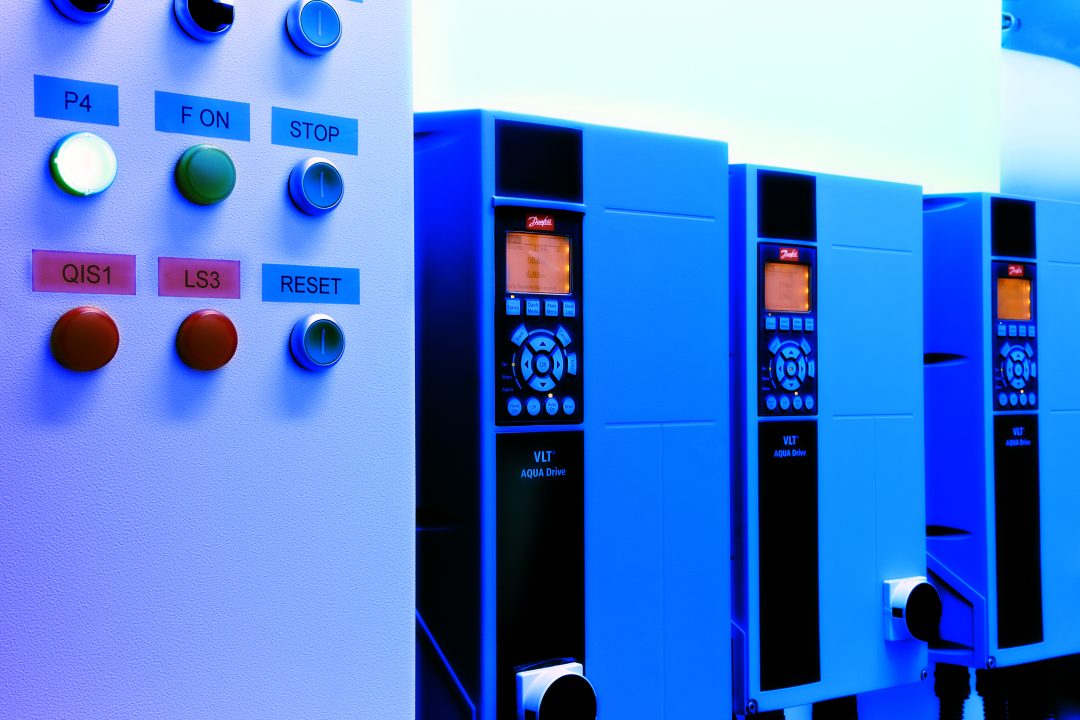
Developed by Danfoss and field-tested by Triton, the Nessie is a device that recovers part of the energy that’s produced when water goes through the RO membranes at high pressure. It works together with a booster to recover even higher levels of energy that are then reincorporated into the desalination process.
The iSave
Like the Nessie pump, the iSave is an energy recovery device that was developed by Danfoss and field-tested by Triton. The iSave builds on and improves the Nessie technology by combining the Nessie and booster in one device.
R&D Projects
Sustainable Water Management
In addition to our technological lines, at Triton we lead and participate in European research projects that seek to develop sustainable solutions for the treatment and use of complex water resources.

Project Life Leachless
In Europe, large quantities of leachates are generated and, due to their composition, they have a high polluting load.
The LEACHLESS project proposes a treatment model that will be carried out on site using a new and cost-effective technology that combines solar evaporation/condensation and direct osmosis.
The prototype will work using renewable energy (solar energy, biomass and waste heat), which will minimize the carbon footprint of the process.
Project Lixiv_IA
Solutions based on AI and big data for the optimization of autonomous plants used in leachate treatment
LIXIV_IA proposes the development of solutions based on artificial intelligence (AI) and big data for the optimization of the operation of autonomous containerized plants for the treatment of Leachate from different origins (urban solid waste and wastewater).
Leachate has high concentrations of organic and inorganic contaminants, metals and dangerous chemicals, and its composition is highly variable, affecting the operation of the plant, which is why it is necessary to introduce data analysis and development of models that allow integral optimization of the key plant processes